
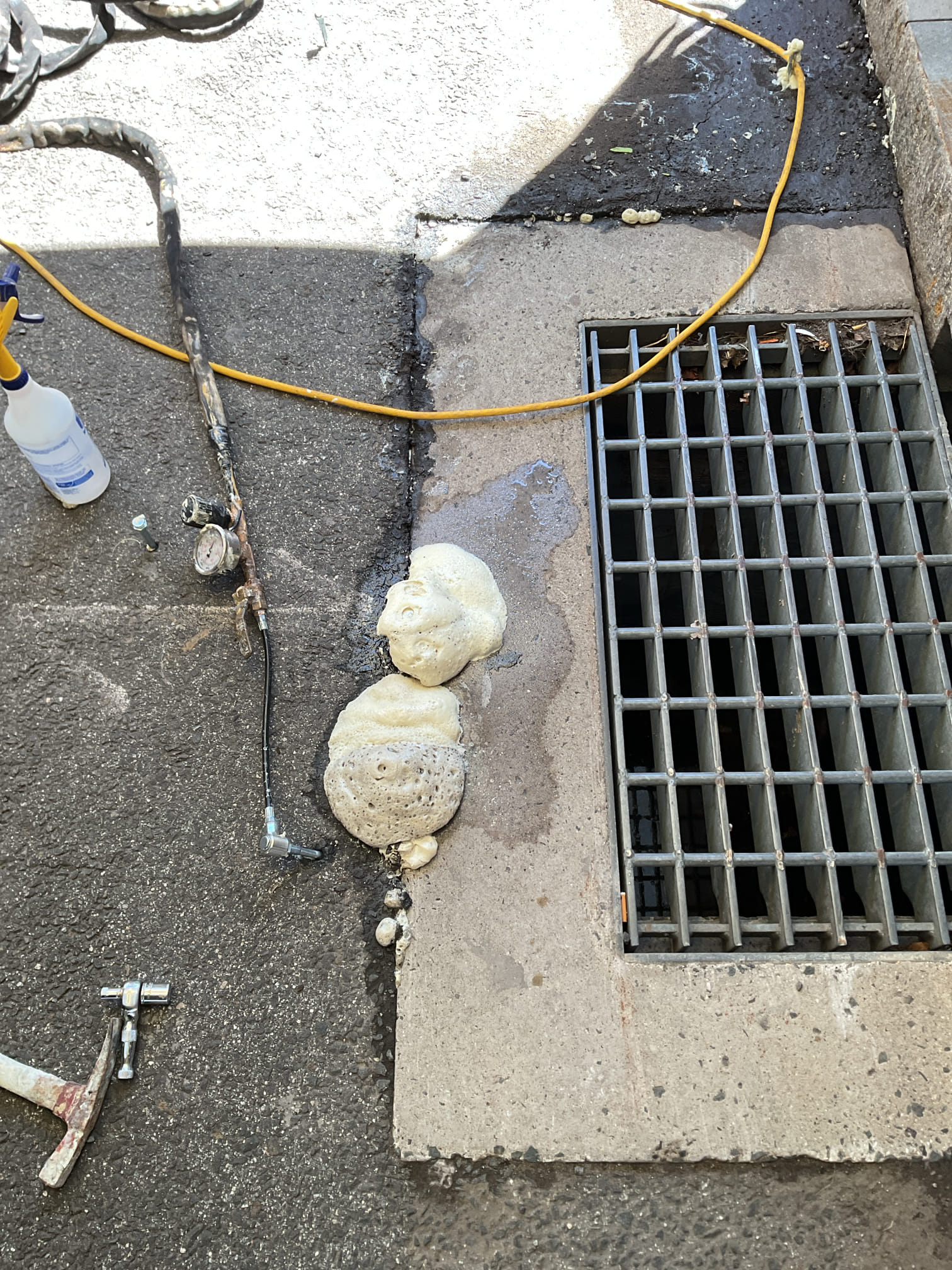
Settled and Uneven Commercial Slabs Need Slab Stabilization
When warehouse floors sink, dock aprons settle, or slabs keep moving after surface repairs, the problem is usually lost support below the concrete. Savy & Sons reviews subsurface conditions and recommends slab stabilization when void fill or lifting is the practical repair.
- Sunken slabs in traffic lanes
- Uneven floors and trip hazards
- Hollow sounds under rack loads
- Dock apron settlement
- Settlement over utility trenches
- Recurring movement after patching
Request a Slab Stabilization Review
Tell us about settlement or uneven slabs at the site. Our team will review and contact you directly.
 Google
4.9/ 5 from over 65 Google reviews
See on GoogleSpecialty field contractor with engineer-directed scopes where applicable; we serve Connecticut commercial properties.
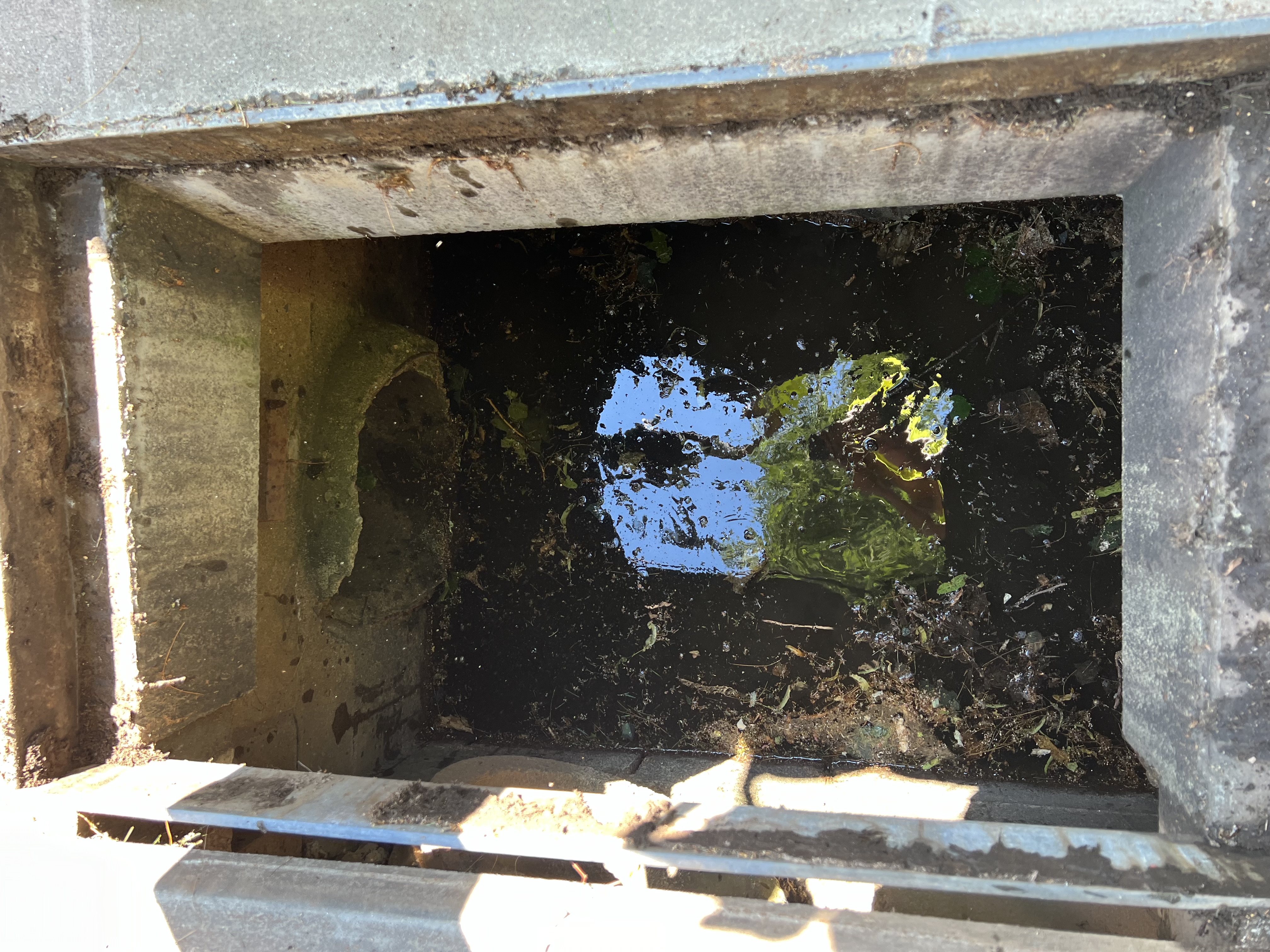
Settled Floors, Uneven Slabs, and Lost Support Under Commercial Concrete
Most facility managers notice slab problems as trip hazards, equipment misalignment, or hollow sounds before they know whether injection, void fill, or stabilization is needed. Below: what is wrong, what happens if the slab keeps moving, and why slab stabilization is the recommended repair when support below the concrete has failed.
- 01Sunken slabs in traffic and loading areas
Forklift paths become uneven. Trip hazards form at transitions and rack aisles lose their design plane as settlement progresses.
Recommended repair: Slab stabilization with polyurethane lifting or grout injection restores elevation and fills voids below the settled zone.
- 02Uneven floors affecting equipment alignment and operations
Racking, conveyors, and production equipment go out of level. Maintenance costs rise as operators work around floor irregularities.
Recommended repair: Targeted slab leveling matched to void extent and load requirements brings the floor back to a usable plane.
- 03Void-related deflection under rack and equipment loads
Unsupported spans deflect under concentrated loads. Cracking accelerates and rack stability may be compromised.
Recommended repair: Void fill plus elevation correction restores support under high-load zones before slab fracture requires replacement.
- 04Trip hazards at slab joints, transitions, and dock aprons
Safety incidents and liability exposure increase at dock levelers and ramp transitions where differential settlement is visible.
Recommended repair: Sub-slab void fill and lifting at transition zones addresses the support loss causing joint differential movement.
- 05Dock leveler and apron settlement at loading bays
Trailer seals fail, levelers bind, and loading operations slow as the apron plane drops away from the building.
Recommended repair: Apron stabilization with grout injection or foam lifting targets settlement at dock transitions and leveler pits.
- 06Slab movement recurring after prior surface repairs
Grinding and overlays treat appearance while support below keeps changing. Repair costs repeat with each settlement cycle.
Recommended repair: Slab stabilization addresses subsurface voids or soil loss so surface work has stable support beneath it.
- 07Soil washout and water migration below warehouse floors
Active erosion removes support along drainage paths and utility corridors. Settlement spreads as cavities enlarge.
Recommended repair: Void filling and soil stabilization coordinated with slab lifting stops washout and restores bearing where water migration is the driver.
Commercial Slab Stabilization for Settled, Moving, or Unsupported Concrete
When commercial slabs settle, tilt, or become uneven from lost support below, slab stabilization is the recommended repair because surface grinding and overlays do not restore bearing. Commercial concrete leveling and slab stabilization address floors and pavements that have settled, tilted, or become uneven, typically because support below the slab has changed. On commercial and industrial sites across the Northeast, subsurface conditions often develop from soil movement, washout, void formation, poor compaction, or water migration along drainage paths and utility corridors. The visible unevenness is the symptom; the loss of support below the slab is usually the condition that must be addressed for repairs to hold.
Surface grinding, joint sealing, or thin overlays may improve appearance without helping restore support conditions where voids or soil loss exist underneath. When loads from forklifts, storage racks, vehicles, or equipment continue to bear on unsupported zones, settlement can progress and cracks can reopen. Depending on slab thickness, void extent, load requirements, and access, we may use polyurethane lifting, grout injection, void filling, cellular concrete placement, or related stabilization methods, sometimes combined with soil stabilization when the ground itself is still migrating.
Polyurethane foam lifting can raise slab elevation while filling small voids in selected applications. Cementitious grout or low-density cellular concrete may be appropriate for larger cavities or zones requiring controlled fill placement. Method selection follows field review of settlement pattern, joint behavior, adjacent utilities, water activity, and return-to-service timing, not a default residential mudjacking approach scaled up to a warehouse floor.
We evaluate what is happening below the slab before selecting a leveling or stabilization path. Port layout, injection sequence, and work phasing are planned around operational constraints in occupied facilities. Where engineer-directed specifications apply, materials and placement are coordinated accordingly. Savy & Sons is a specialty field contractor, not a geotechnical engineering firm. Engineering design, bearing determinations, and regulatory interpretations should be provided by licensed professionals when required.
Commercial concrete leveling and slab stabilization matter for warehouses, distribution centers, parking structures, manufacturing plants, and institutional facilities where restoring slab plane and subsurface support may improve safety, equipment function, and maintenance conditions, especially when settlement is progressing. Addressing the cause below the slab early may limit the scope of repeat repairs and surface remediation over time.
When slab movement is tied to soil washout or open voids below the floor, the repair path may also involve Void Filling & Sub-Slab Stabilization, Soil Stabilization, Low-Density Cellular Concrete, and Chemical Grouts.
Engineering design, structural determinations, geotechnical engineering opinions, and regulatory interpretations should be provided by the appropriate licensed professionals when required.
Need Slab Leveling & Stabilization evaluated for your structure?
Describe access, findings, and what is failing. Use Request a Commercial Assessment or call the office.
Slab Stabilization Condition-to-Method Paths
| Condition | Structure or environment | Possible service path | Notes |
|---|---|---|---|
| Sunken warehouse slab in a forklift traffic lane | Industrial floor slab over granular fill with localized settlement | Polyurethane lifting or grout injection through drilled access; void extent review | Work often phased in lanes; settlement history and load paths guide port layout. |
| Void-related deflection under storage rack loads | Slab-on-grade in high-bay storage area | Void fill plus elevation correction; may pair with soil stabilization if subgrade is migrating | Rack load distribution and slab thickness influence material and injection depth. |
| Settlement at a loading dock apron and leveler pit | Reinforced slab at dock transition with differential movement | Targeted lifting and void fill; evaluate utility trenches and compaction below apron | Dock operations often require tight return-to-service windows. |
| Parking structure ramp or plaza settlement | Post-tensioned or reinforced slab at drain or transition zone | Grout or foam lifting with attention to joint behavior and drainage concentration | May coordinate with waterproofing or joint repair scopes when water migration contributed. |
| Slab settlement over a utility trench or backfill zone | Commercial floor with documented or suspected trench line settlement | Void fill and support restoration along trench footprint; compaction review of backfill | Utility clearance and as-built location affect access planning. |
| Recurring unevenness after prior surface grinding or overlay | Occupied commercial facility with progressive settlement | Sub-slab evaluation targeting soil loss or voids; stabilization before further surface work | Surface-only repairs often fail when support below the slab is still changing. |
| Equipment pad settlement with operational alignment issues | Reinforced pad over loose or eroded subgrade | Void fill and lifting; soil stabilization if washout or piping is active below pad | Equipment sensitivity and cure time shape sequencing and material choice. |
| Municipal yard slab settlement at heavy vehicle paths | Exterior commercial pavement or service yard slab | Grout injection or cellular fill depending on cavity size and traffic loads | Weather, drainage, and traffic control windows are planned in advance. |
Which Slab Leveling & Stabilization path fits your site?
Tell us which row looks closest. Include photos or inspection notes when you have them.
Concrete Leveling, Slab Support, and Subgrade Stabilization Methods
Settled or moving slabs may need void fill, grout injection, soil stabilization, or a combination depending on whether the issue is missing support, active water, or poor subgrade below the slab. We select methods after reviewing load paths, slab thickness, and access, not a single lifting product for every floor.
- Polyurethane foam lifting to raise slab elevation and fill small voids in selected applications
- Cementitious grout injection for void fill and localized slab support restoration
- Low-density cellular concrete placement for larger cavities beneath slabs and pavements
- Controlled void filling coordinated with elevation correction where cavity size requires it
- Soil stabilization or densification when subgrade migration continues below the slab
- Phased injection sequencing to limit disruption in occupied traffic and rack zones
- Load-aware material selection for forklift, rack, and vehicle-load slabs
- Utility clearance planning before drilling or injection access
- Engineer-specified grout or fill products when directed by project documents
- Zoned work plans for return-to-service timing in active facilities
Discuss Slab Leveling & Stabilization methods for this job
Send facility type, slab location, photos or floor survey, settlement extent, load conditions, and operational windows for work We will tell you what fits and what does not.
Where Commercial Slab Stabilization Applies
Slab conditions at industrial and utility facilities often overlap with Chemical Grout Injection, and Concrete Restoration & Coatings.
- Warehouse and distribution center floors
- Manufacturing and assembly plant slabs
- Parking structures and commercial garages
- Loading docks, aprons, and drive aisles
- Retail and big-box interior slabs
- Institutional and healthcare campus pavements
- Cold storage and food processing floors
- Airport and transit support slabs
- Equipment and generator pads
- Commercial plaza and hardscape slabs
- Industrial traffic lanes and yard pavements
- Municipal fleet and service yard slabs
Is your facility a fit for Slab Leveling & Stabilization?
Share the property type, location, and the condition you need addressed.
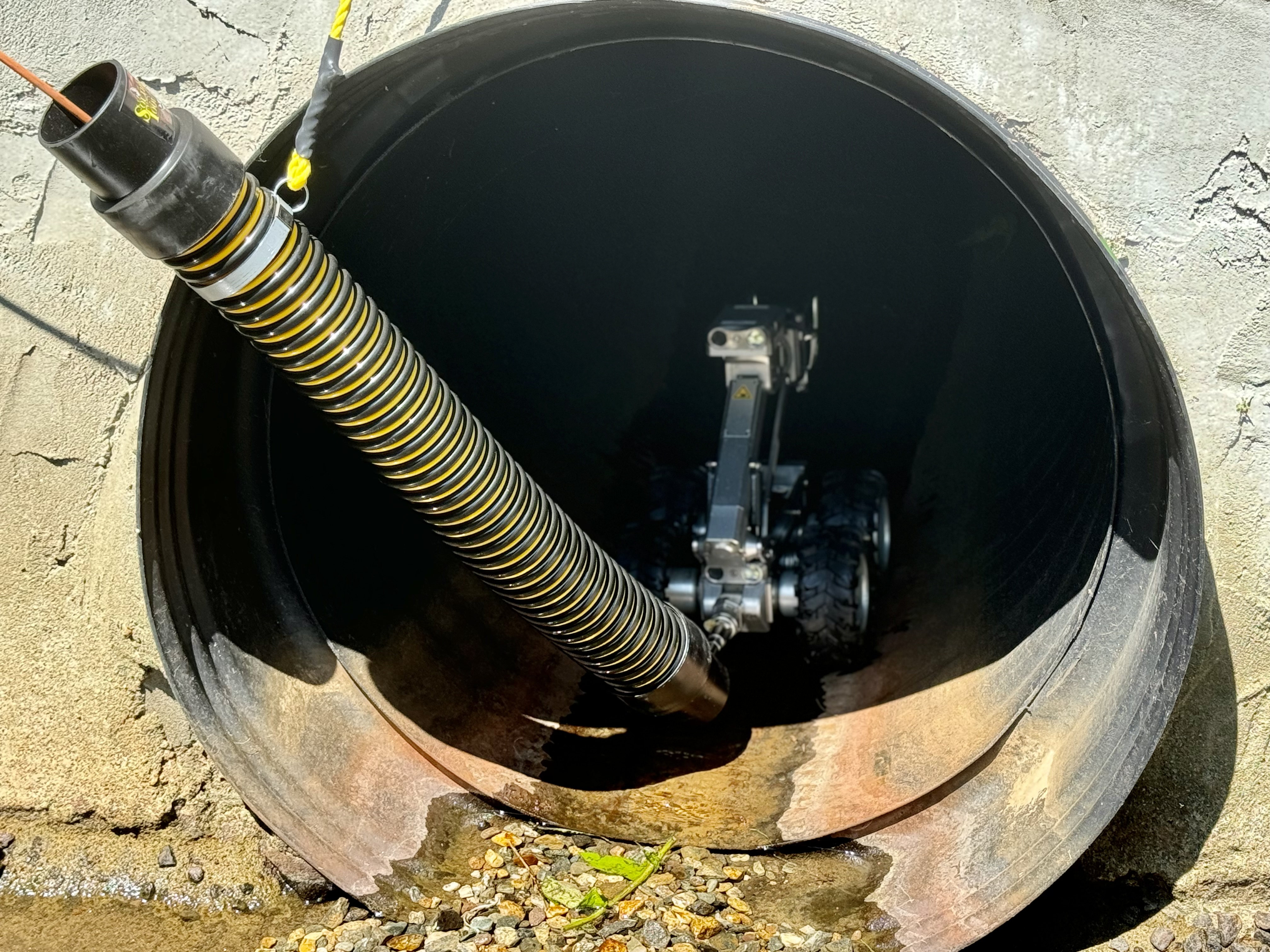
Choosing the Right Slab Stabilization Approach
If you are seeing sunken slabs, trip hazards, or recurring floor movement, the subsurface cause matters more than the surface elevation. The same sunken warehouse aisle may involve small voids under one bay and ongoing soil washout along a utility trench in another.
Polyurethane lifting may raise slab elevation and fill small voids in selected zones. Cementitious grout or LDCC may suit larger cavities or controlled fill placement. When subgrade soil is still migrating, leveling may need to be paired with void filling or soil stabilization, evaluated during field review rather than assumed from surface symptoms alone.
Unsure which Slab Leveling & Stabilization approach fits?
Send access limits, findings, and urgency. We help scope the next field step.
Concrete Leveling and Slab Stabilization Process
Review Slab Condition
Assess settlement pattern, cracks, joint movement, and operational impacts; review site photos, floor surveys, or inspection reports when provided.
Evaluate Subsurface Causes
Discuss likely voids, soil loss, washout, compaction issues, or water migration based on site history and field observations.
Coordinate Access
Plan work zones around traffic, equipment, rack aisles, and facility operations with agreed phasing.
Select Leveling Approach
Choose lifting, void fill, or stabilization methods suited to slab type, loads, and subsurface conditions.
Execute Stabilization
Perform injection or fill placement with monitoring of slab response and protection of adjacent areas.
Verify Results
Confirm elevation and support improvement against agreed visual or project criteria.
Document Work
Provide field notes, product data, or project documentation where required.
Ready for a Slab Leveling & Stabilization assessment?
Share the location, access constraints, and what you already know. We respond within one business day.
Slab Stabilization for Commercial and Industrial Facility Floors
We level and stabilize commercial slabs at warehouses, parking structures, loading docks, and industrial facilities where settlement and loss of support affect traffic, equipment alignment, and operational safety.
As a specialty field contractor, we select lifting, void fill, and stabilization methods based on subsurface conditions and commercial load requirements, coordinating with engineers and facility teams on phased execution in occupied buildings.
- Warehouse and industrial floors
- Parking structures and garages
- Loading and traffic areas
- Occupied facility phasing
- Coordination with engineers and GCs
- Load-aware method selection
- Utility clearance planning
- Minimal-disruption sequencing
- Submittal support where applicable
Ask Savy & Sons about Slab Leveling & Stabilization
Send facility type, slab location, photos or floor survey, settlement extent, load conditions, and operational windows for work Or call and talk through the structure with the office.
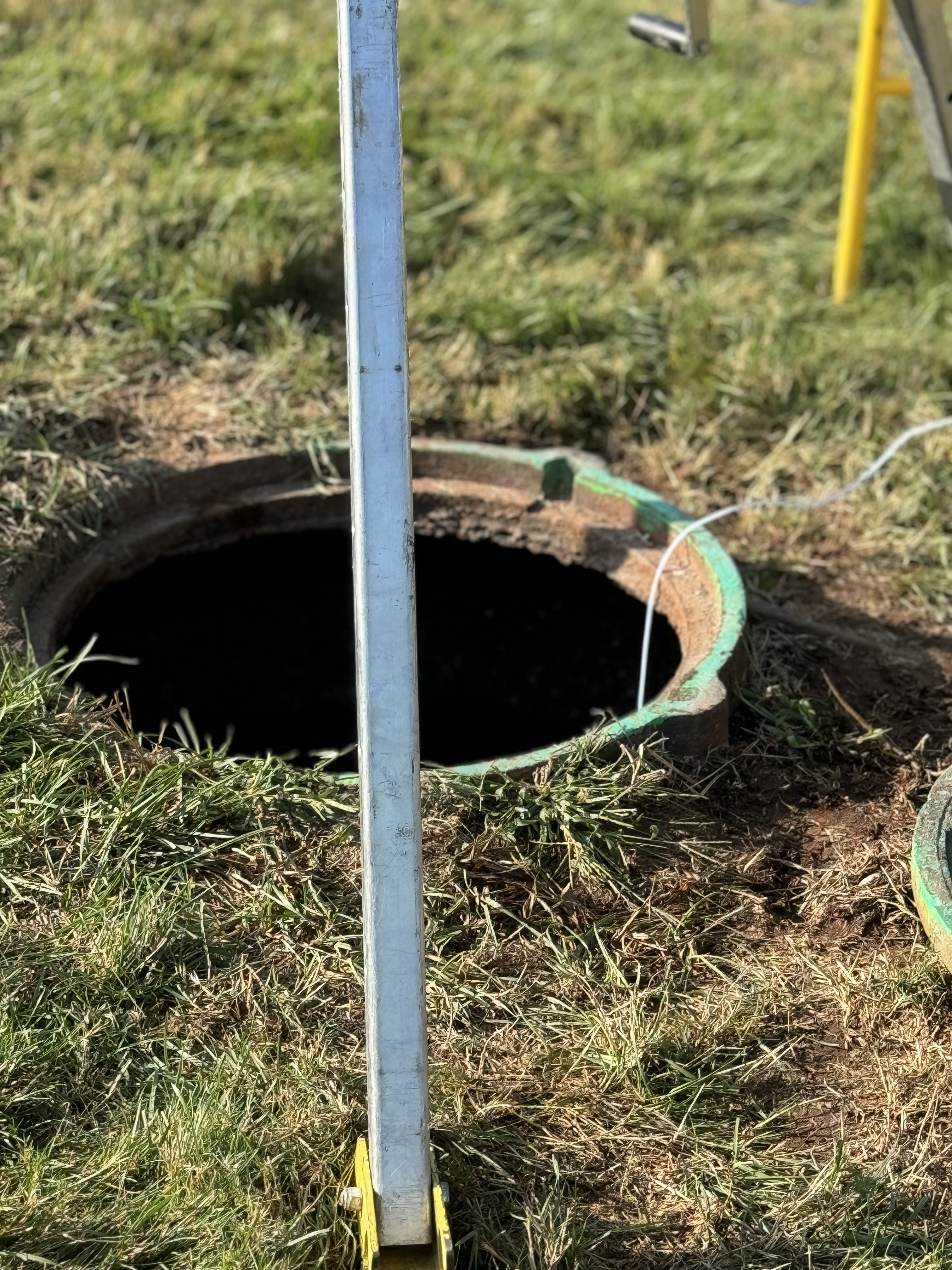
Restore Slab Support and Plane
If sunken or uneven slabs are affecting operations at your facility, we can review conditions and discuss a stabilization path suited to commercial loads and subsurface cause, not just surface symptoms.
- Facility type and slab location
- Settlement extent and operational impact
- Photos or floor elevation survey if available
- Known water, washout, or utility issues below slab
- Traffic, rack, or equipment loading conditions
Serving Connecticut Commercial and Municipal Properties
Savy & Sons supports commercial, municipal, industrial, institutional, and infrastructure properties across Connecticut. We rehabilitate sewer assets, wastewater structures, below-grade concrete, and buried pipelines when water intrusion, corrosion, infiltration, or structural loss threatens operations.
For slab stabilization work, this often means addressing the soil, void, or support condition beneath settled commercial concrete rather than only correcting the surface elevation.
View the Connecticut commercial service areaDo we cover your Slab Leveling & Stabilization site?
Share the ZIP or address with the site condition so we can confirm coverage and next steps.
Related Technical Systems
Material and field-system reference pages related to this scope. They support buyer education and are not a substitute for site review.
View all technical systems