
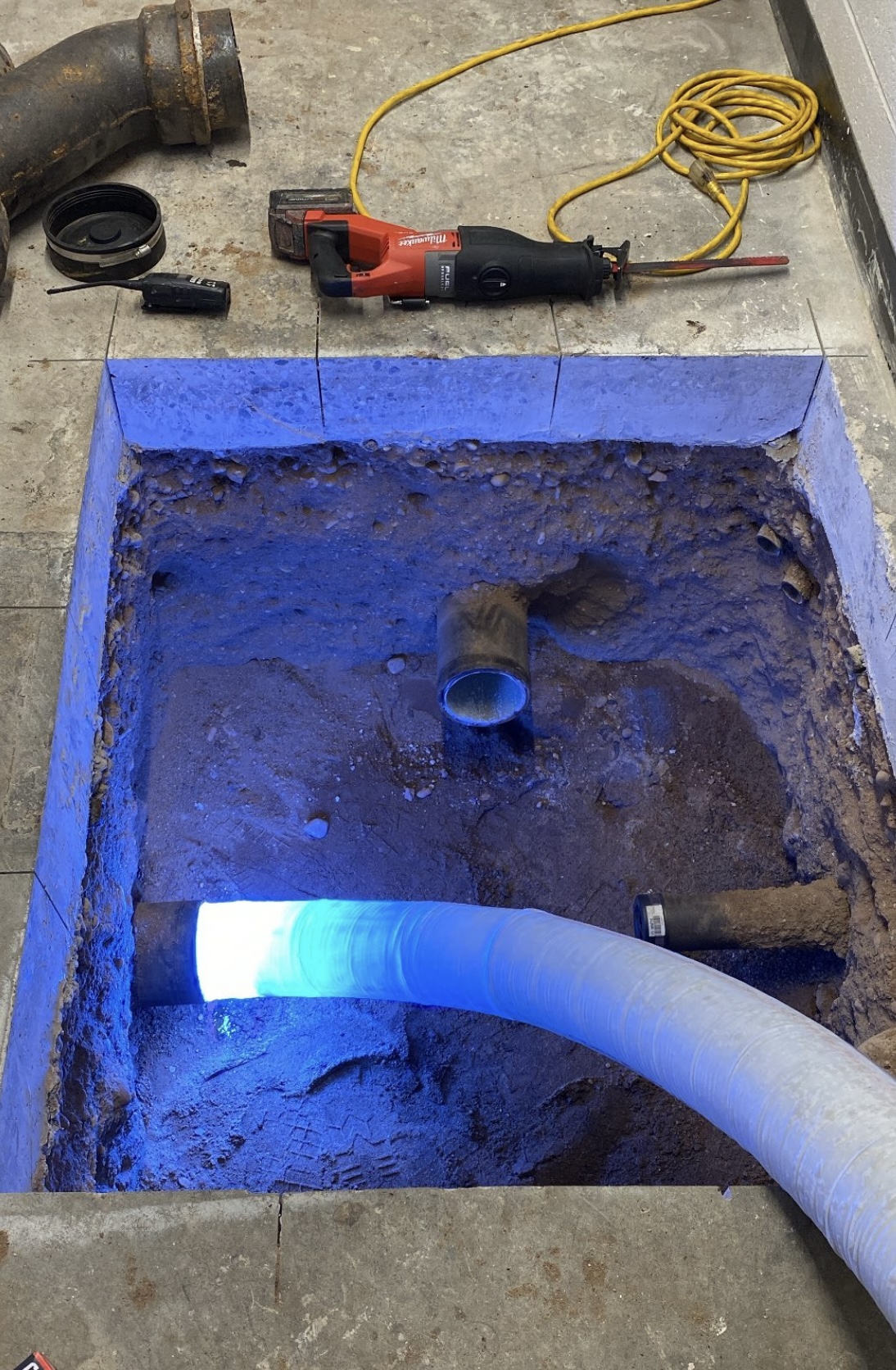
Commercial Trenchless Sewer Repair & CIPP Lining in Connecticut
If your commercial sewer main or lateral keeps backing up, has root intrusion, failed joints, corrosion, infiltration, or structural deterioration, our CCTV equipment lets us see what is actually happening inside the pipe.
If the line can be rehabilitated with CIPP, our crew can install a new structural liner through limited access instead of opening the entire sewer alignment. If part of the pipe needs a point repair, excavation, or replacement instead, we will show you where and tell you why.
We perform commercial trenchless sewer repair, CIPP lining, sewer relining, and pipe rehabilitation for commercial properties, municipalities, industrial facilities, institutions, and infrastructure projects throughout Connecticut.
We inspect the pipe first. We show you what we find. Then we tell you whether lining, localized repair, or replacement makes sense.
Send Us Your Sewer Inspection Findings
If you already have CCTV footage, an inspection report, pipe drawings, photos, or a known failure location, send them to us. We can start with the information you already have. If we need additional cleaning, our own CCTV inspection, measurements, or a site visit before we can price the work responsibly, we will tell you exactly what we need.
Send Us Your Sewer Inspection Findings
If you already have CCTV footage, an inspection report, pipe drawings, photos, or a known failure location, send them to us.
We can start with the information you already have. If we need additional cleaning, our own CCTV inspection, measurements, or a site visit before we can price the work responsibly, we will tell you exactly what we need.
 Google
4.9/ 5 from over 65 Google reviews
See on GoogleCIPP Lining, Sewer Relining & Trenchless Pipe Repair
Our trenchless sewer work covers deteriorated mains and laterals on commercial, municipal, industrial, and institutional properties. Depending on what our CCTV inspection shows, the work may include:
- CIPP sewer lining and cured-in-place pipe rehabilitation
- Commercial sewer lining and sewer relining
- Trenchless sewer and pipe repair
- Mainline and lateral sewer rehabilitation
- Municipal sewer lining and collection-system rehabilitation
- Industrial sanitary sewer rehabilitation
- Cast iron and clay sewer lining where the host pipe can accept a liner
- Localized point repair and excavation where lining alone will not correct the failure
Trenchless rehabilitation is also commonly described as no-dig sewer repair, but limited excavation may still be required for access, severe defects, or localized repairs.
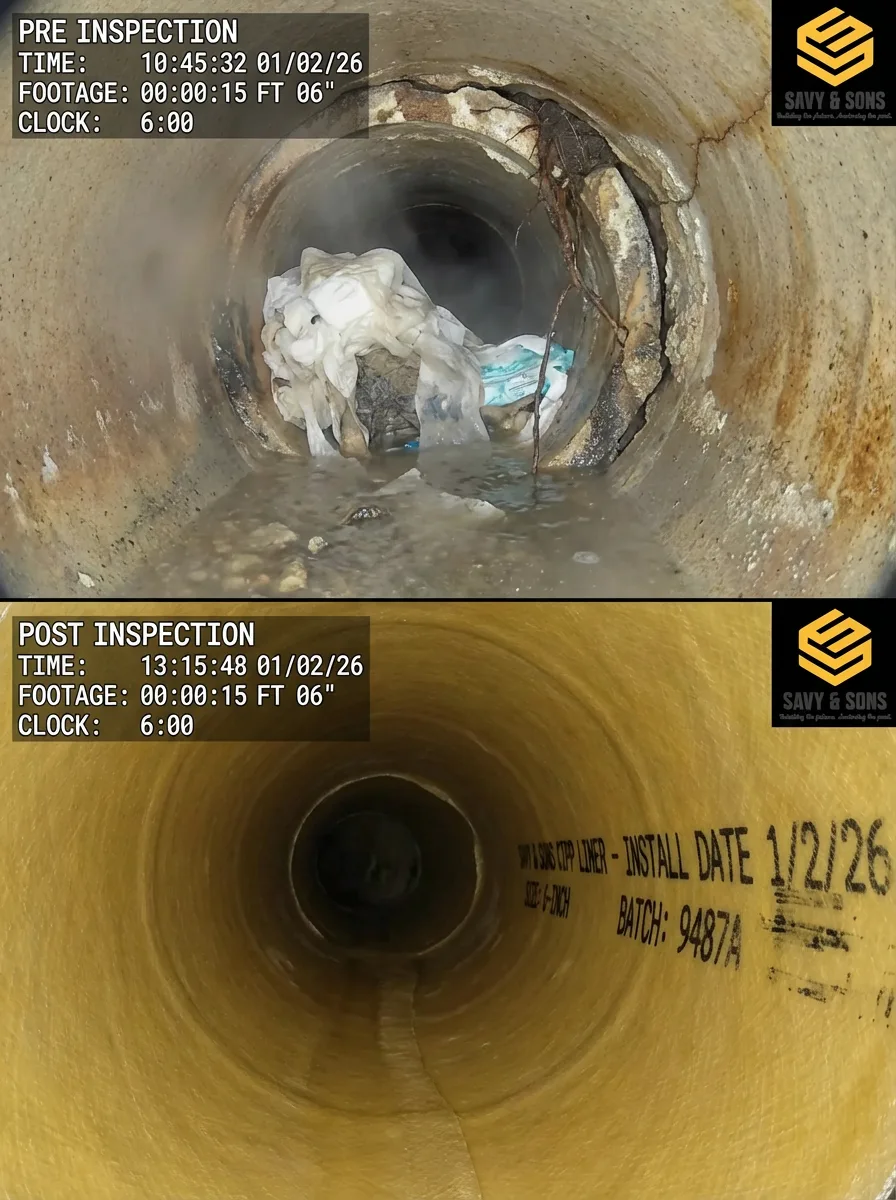
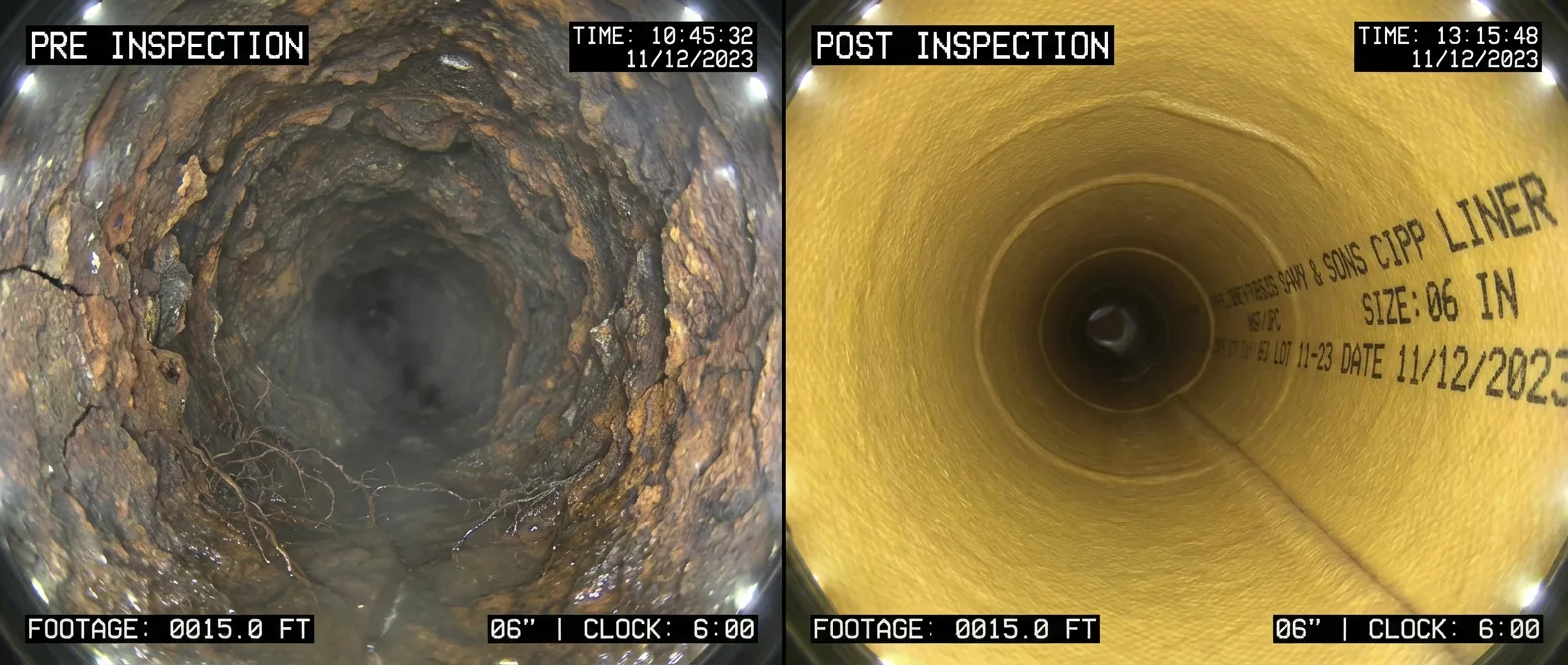
See the Sewer Before and After CIPP Lining
Our CCTV mainline equipment lets us inspect the host pipe before we recommend a repair and televise the rehabilitated section again after the work is complete.
We look for root intrusion, failed joints, corrosion, infiltration, offsets, deformation, prior repairs, pipe material, service connections, and anything else that can affect lining.
- We show you what is actually happening inside your sewer.
- We compare the existing host pipe with the completed liner.
- Your owner, facilities team, engineer, municipality, or project manager can review the same footage we are using to discuss the work.
We do not decide on CIPP from a surface symptom alone. We look inside the sewer first.
Already Have CCTV Footage or Pipe Photos?
Send them to us with the pipe location, diameter, material if known, access information, and anything we should know about shutdowns, traffic, tenants, production, or other operating restrictions.
Commercial Sewer Problems We Repair Trenchlessly
A recurring backup tells us there is a problem. Our CCTV equipment helps us determine whether the cause is roots, failed joints, corrosion, structural deterioration, infiltration, an offset, a belly, or another condition inside the sewer.
We install CIPP, but we do not assume every sewer should be lined. We look at the actual pipe first.
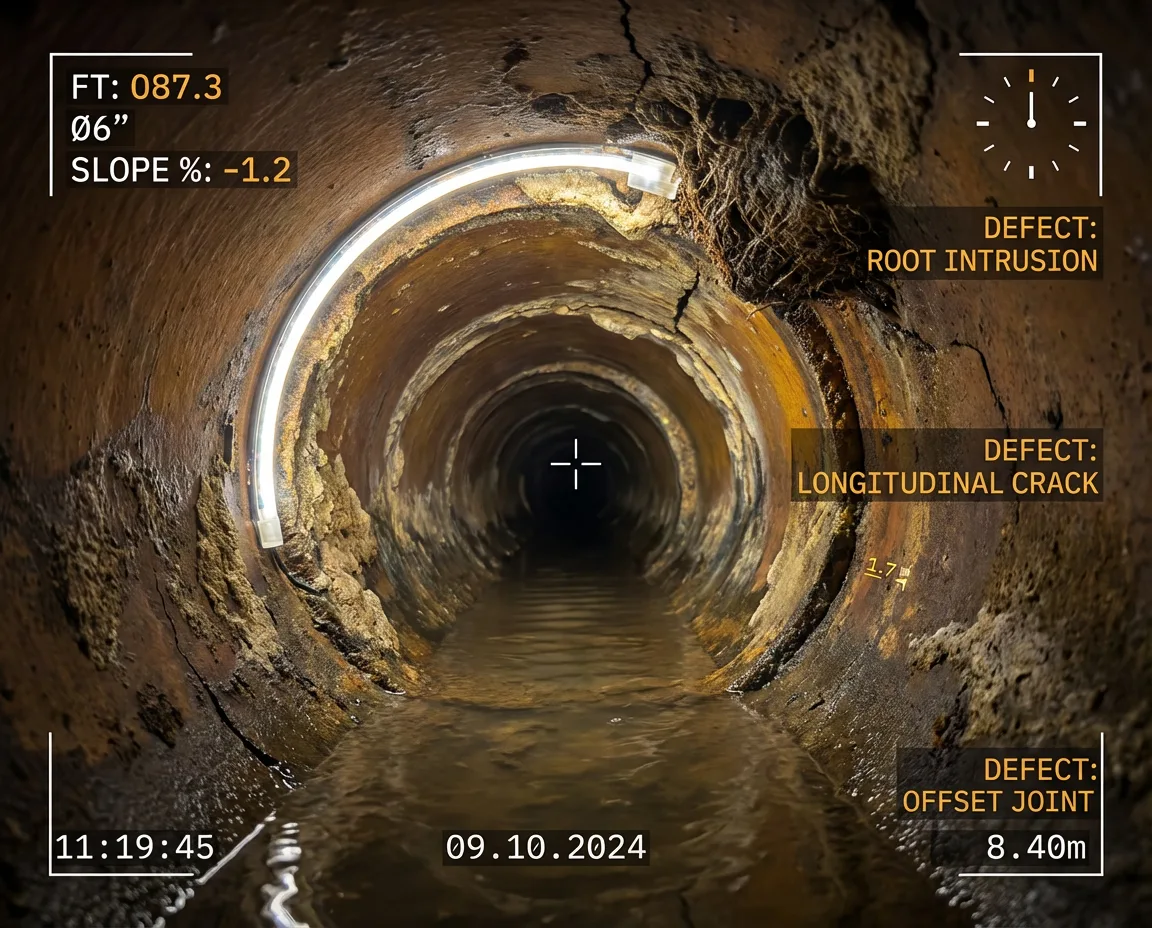
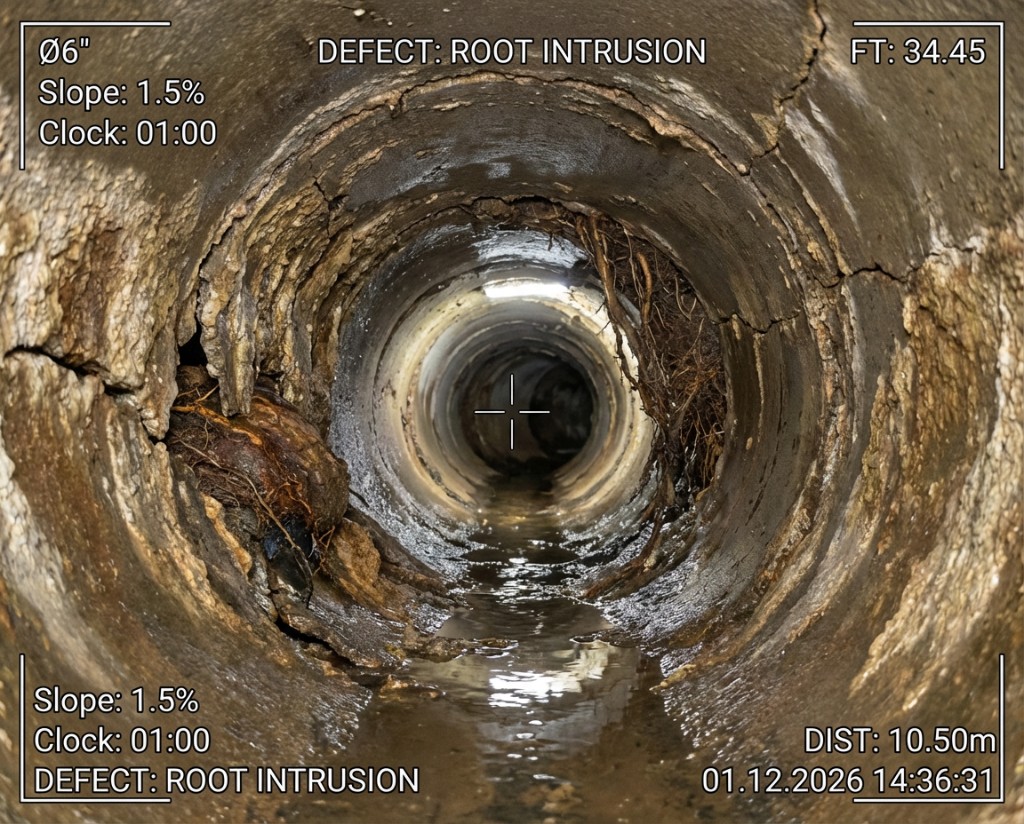
Root Intrusion and Failed Joints
Roots usually enter through an opening in the sewer. We televise the line, locate the root entry, clean and prepare the host pipe, and determine whether CIPP can seal the failed joints and create a continuous lined section.
What we look at
Root location, joint condition, pipe geometry, service connections, access, and the condition of the rest of the run.
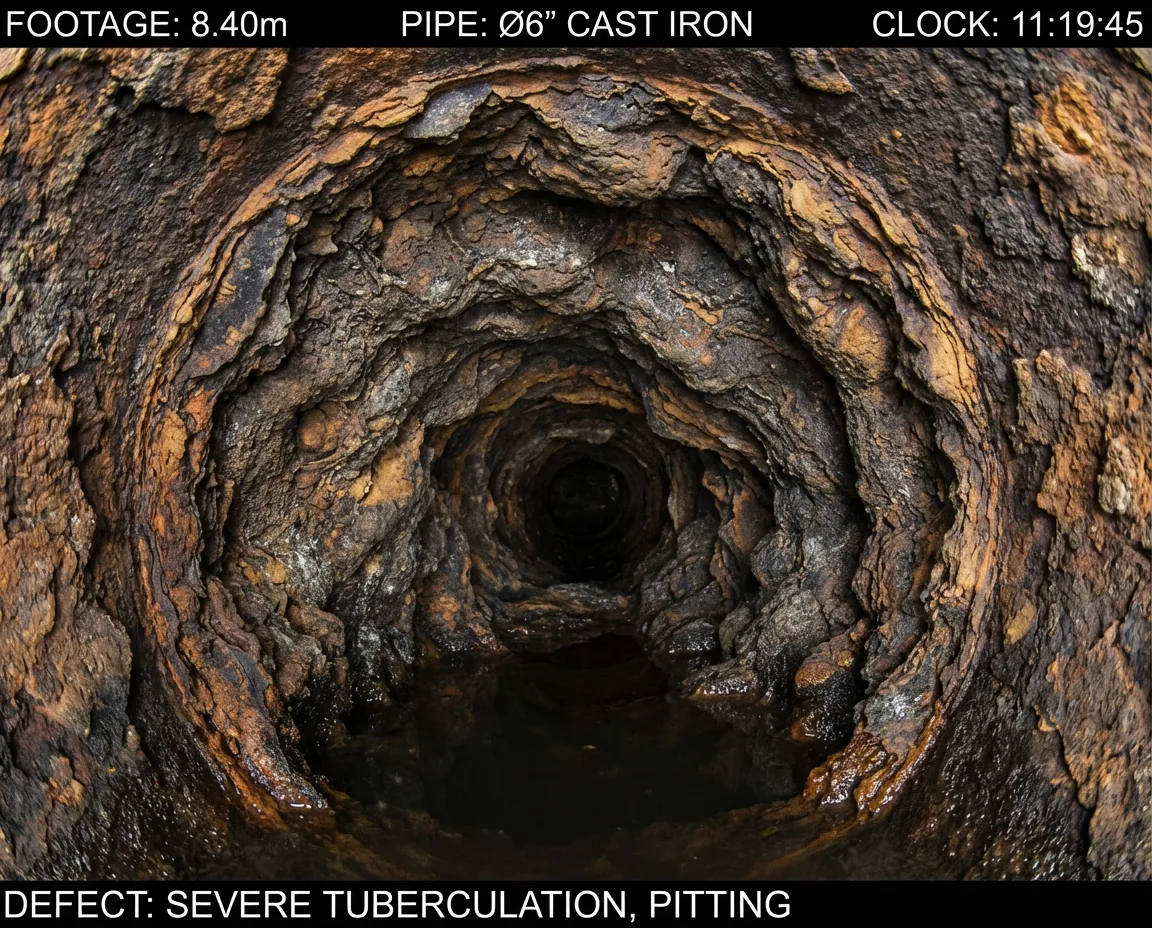
Corroded Cast Iron and Deteriorated Clay
Cast iron and clay sewer pipe can lose interior wall, build heavy scale, crack, or fail at the joints. We clean the line so we can see the actual remaining host pipe before we recommend lining.
What we look at
Remaining pipe bore, corrosion, scale, cracks, offsets, diameter, bends, connections, and access.
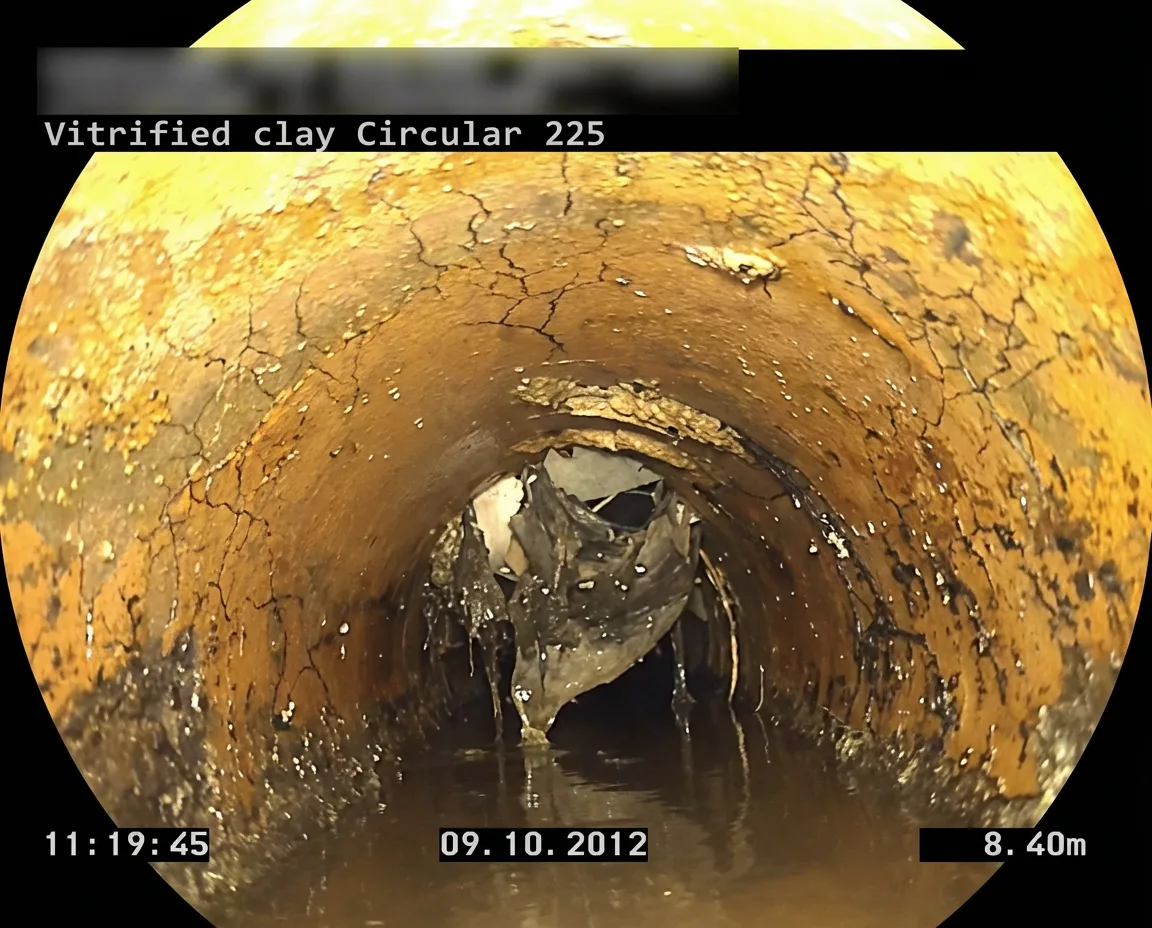
Offsets, Bellies and Structural Damage
CIPP does not straighten a major belly or move a badly offset pipe back into position. If our CCTV shows a section that needs to be opened and repaired first, we show you the location and explain why.
What we look at
Pipe geometry, severity of the offset or belly, collapse, flow, access, and whether the remaining sewer can still be rehabilitated.
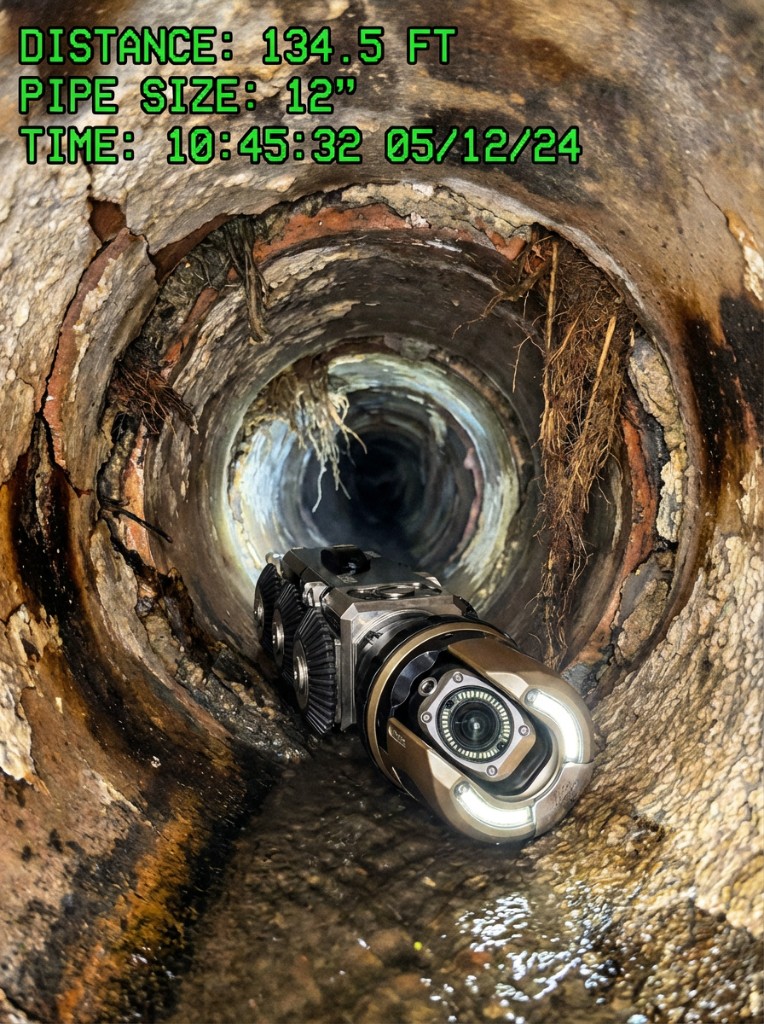
Infiltration and Failed Sewer Joints
Groundwater entering through failed joints can increase I&I and unnecessary flow through a collection system. Where the host pipe can be lined, CIPP can create a continuous rehabilitated section through multiple failing joints.
What we look at
Visible infiltration, joint condition, pipe structure, connections, flow requirements, and manhole access.
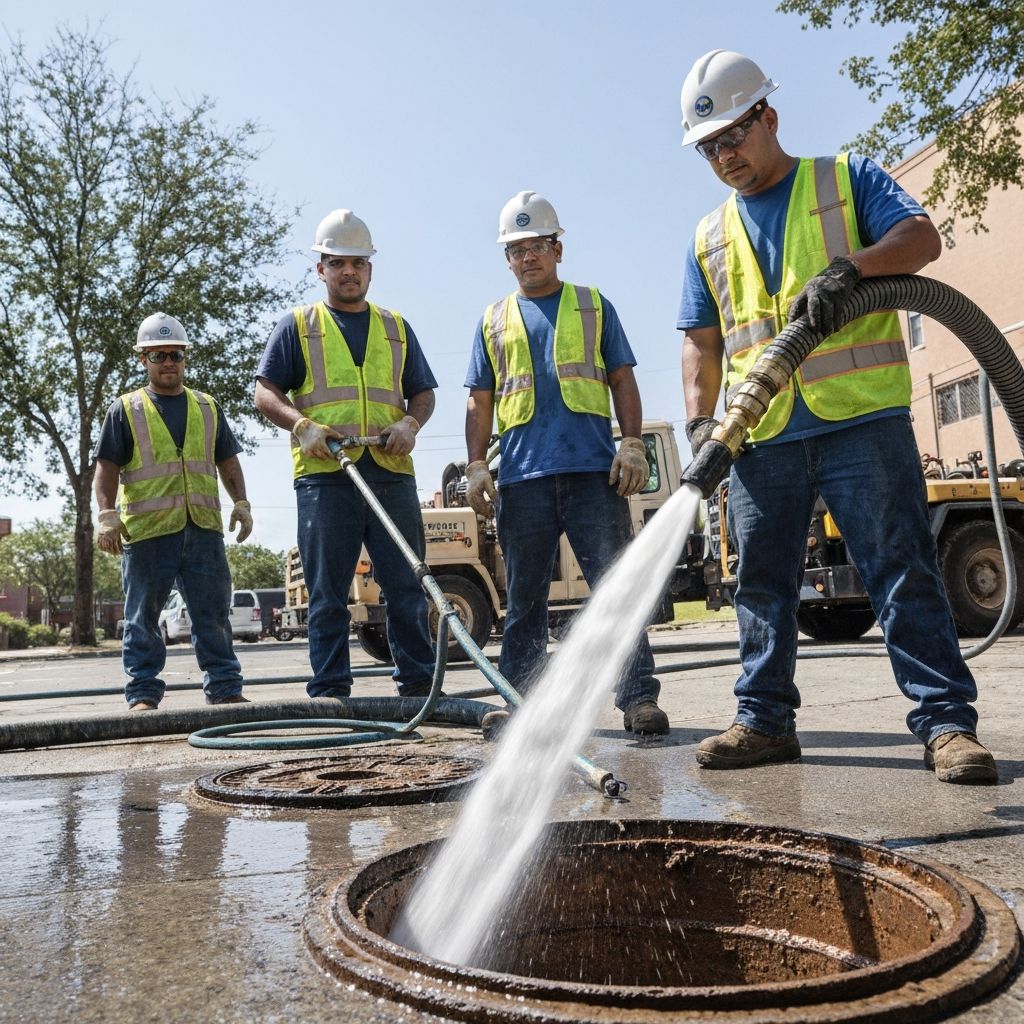
Repeated Commercial Sewer Backups
If your facility keeps paying to jet or clear the same sewer, we want to know why. Our CCTV work helps us separate a recurring maintenance problem from a sewer main or lateral that actually needs structural repair.
What we look at
Roots, buildup, corrosion, failed joints, offsets, pipe-wall loss, backup history, and the location of the line on your property.
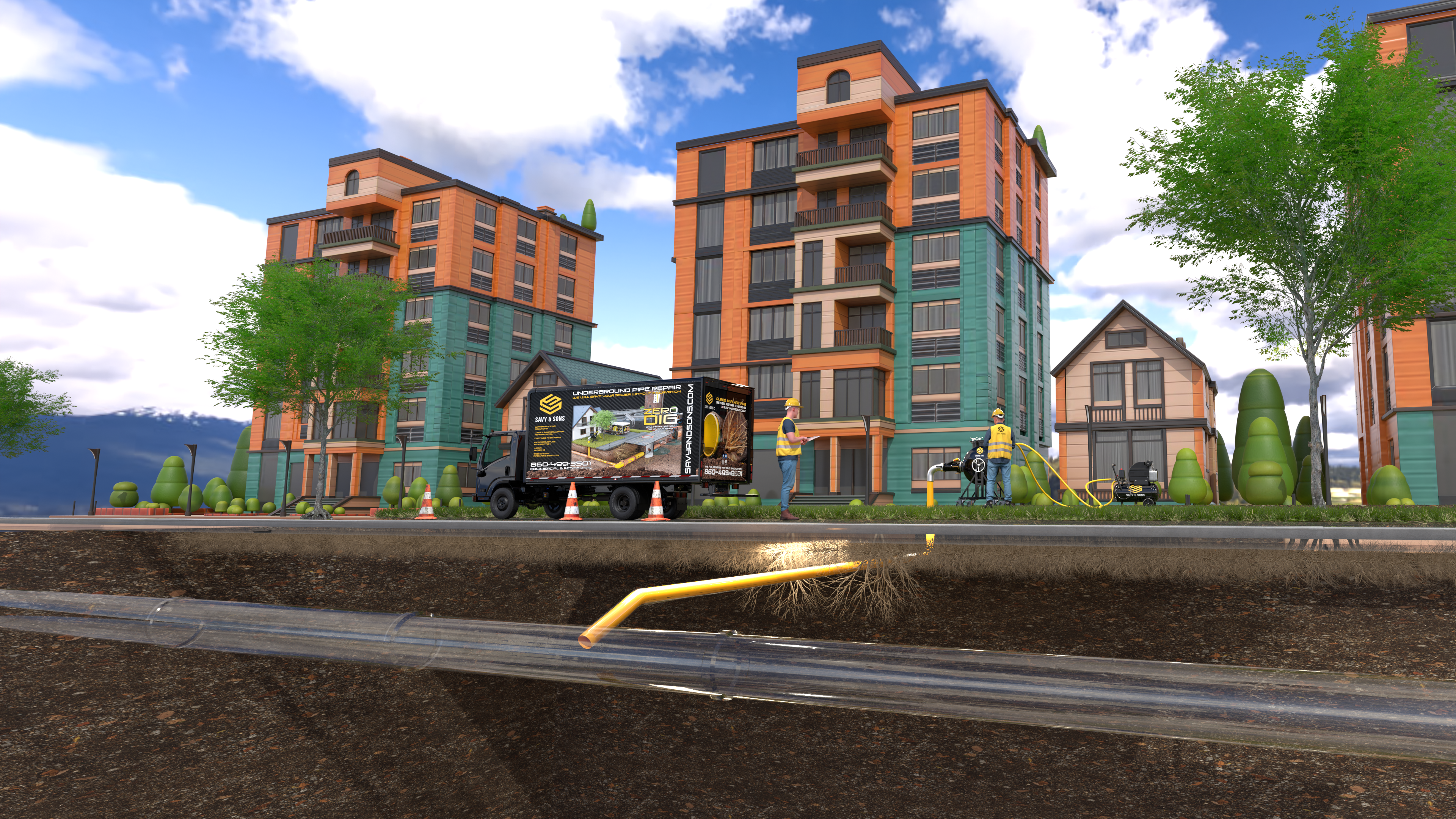
Sewer Lines Under Active Commercial Property
Your failing sewer may run below parking, a loading dock, roadway, building slab, landscaped entrance, hospital access, campus, or production area.
If CIPP works for the pipe, trenchless rehabilitation can often keep excavation concentrated around access points instead of opening the entire alignment.
What we look at
Pipe condition, access points, traffic, tenants, utilities, shutdown requirements, and the areas of your property that have to remain operational.
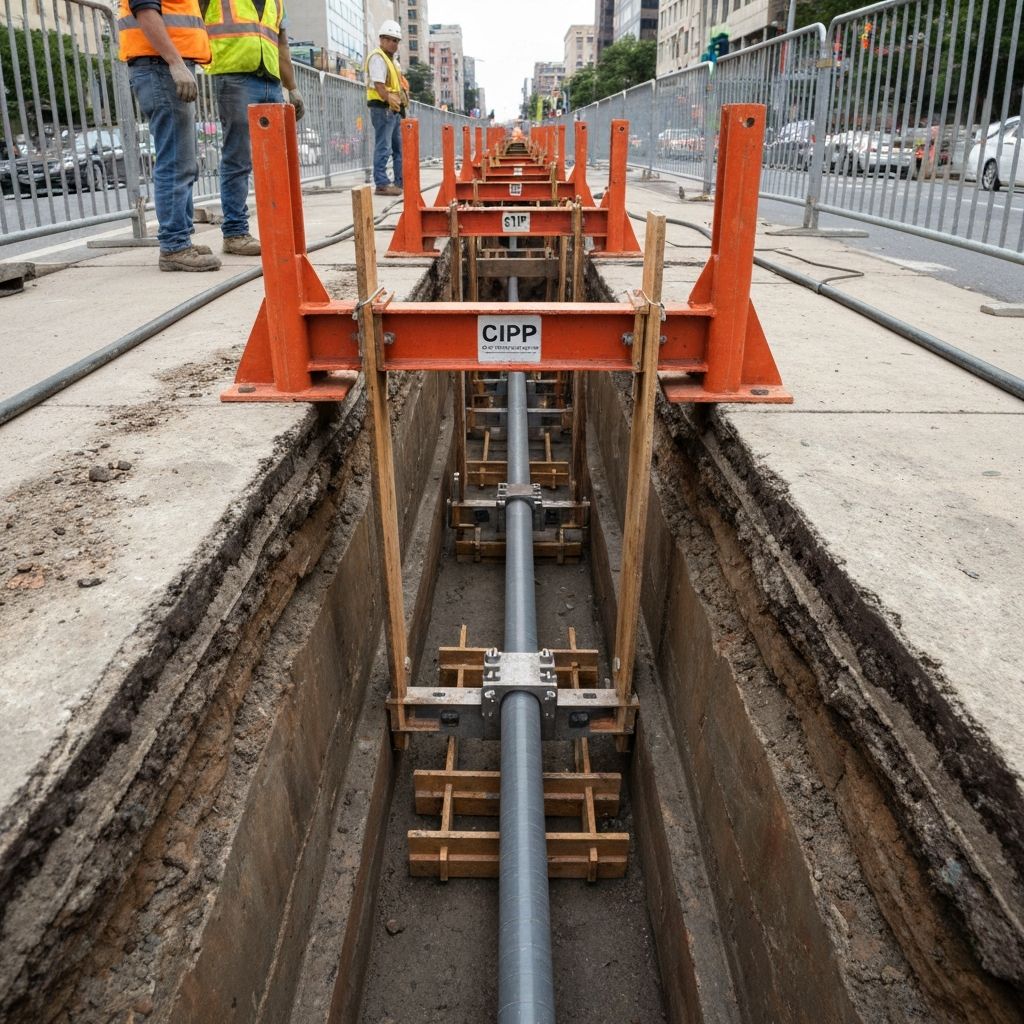
Commercial Sewer Repair Without Opening the Entire Alignment
Sometimes excavation is the correct repair and we perform excavation where it is needed.
The advantage of trenchless sewer rehabilitation is that we may not need to open an entire parking lot, roadway, landscaped corridor, building slab, or other sewer alignment when the pipe can be repaired through limited access.
| Site factor | Full open-cut path | Trenchless CIPP path |
|---|---|---|
| Surface disruption | Continuous trench along the pipe alignment through pavement, landscaping, or slab areas. | Localized access pits at manholes or entry points; most of the alignment stays intact. |
| Utility markouts | Markouts and potholing along the full run where crossings and parallel utilities are present. | Markouts concentrated at pit zones and known conflict points. |
| Traffic and parking | Lane closures, lot sections, or dock lanes out of service for the full excavation length. | Point closures at pits; many sites keep primary access open between work windows. |
| Tenant and retail access | Extended storefront or campus frontage disruption while trench is open and backfilled. | Shorter surface impact windows; work can often phase around business hours. |
| Permits and ROW | Broader excavation permit scope, spoil handling, and restoration along the corridor. | Reduced open excavation can simplify some ROW and restoration scopes when lining is feasible. |
| Return to service | Backfill, compaction, paving, and landscape restore across the full trench length. | Liner cure plus pit restoration at limited access points after connections are reinstated. |
If our CCTV inspection shows that your sewer can be rehabilitated with CIPP, we plan the installation around the access points available on your property.
Your project may still require access pits, bypass pumping, utility markouts, traffic control, connection work, permits, or localized excavation. We discuss those requirements with you before mobilization.
Not Every Sewer Line Should Be Lined
We perform CIPP lining, but we do not believe every failed sewer should automatically get a liner.
Our CCTV inspection has to show us a pipe that can be cleaned, accessed, and prepared for lining. We look at collapse, offsets, bellies, bends, diameter changes, service connections, pipe material, structural condition, and the available access.
A sewer with failed joints, root intrusion, corrosion, infiltration, or pipe-wall deterioration may be a good CIPP candidate.
A severely collapsed section, major offset, significant belly, inaccessible run, or sewer that needs additional capacity may require localized repair, excavation, or replacement.
If CIPP is not the right repair for your sewer, we will tell you.
Commercial CIPP Lining & Trenchless Sewer Rehabilitation
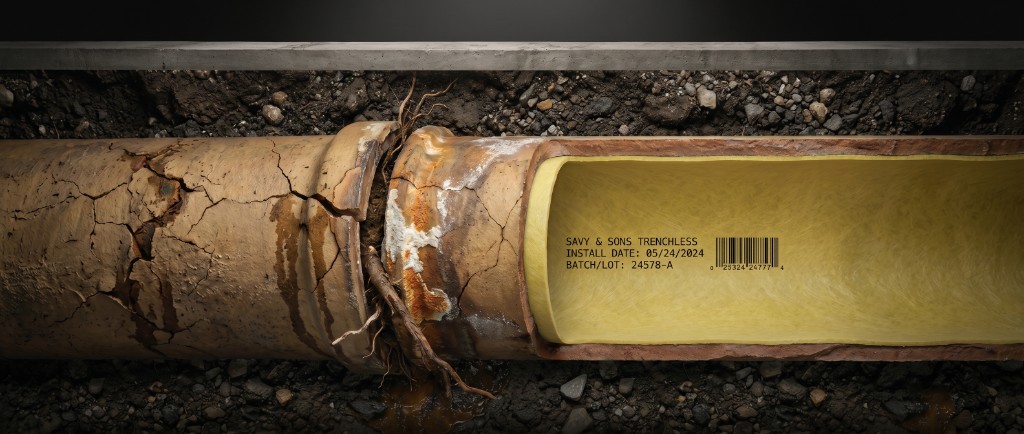
Cured-in-place pipe lets our crew create a new structural pipe wall inside many deteriorated sewer mains and laterals without excavating the entire run.
We first televise and prepare the host pipe. Roots, scale, debris, grease, and loose material have to be removed. We look at the pipe diameter, material, bends, service connections, access, offsets, structural condition, and run length before the liner is staged.
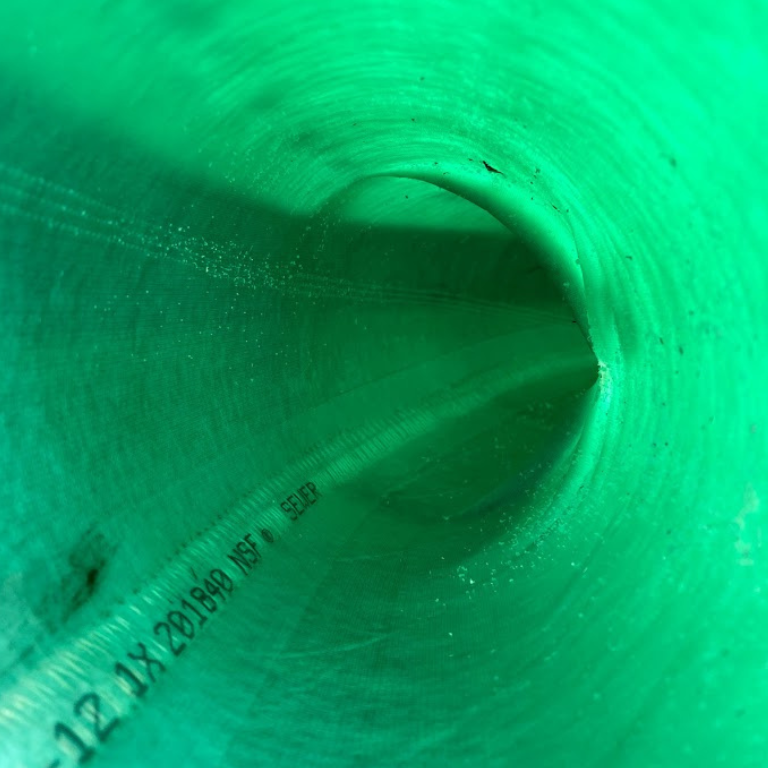
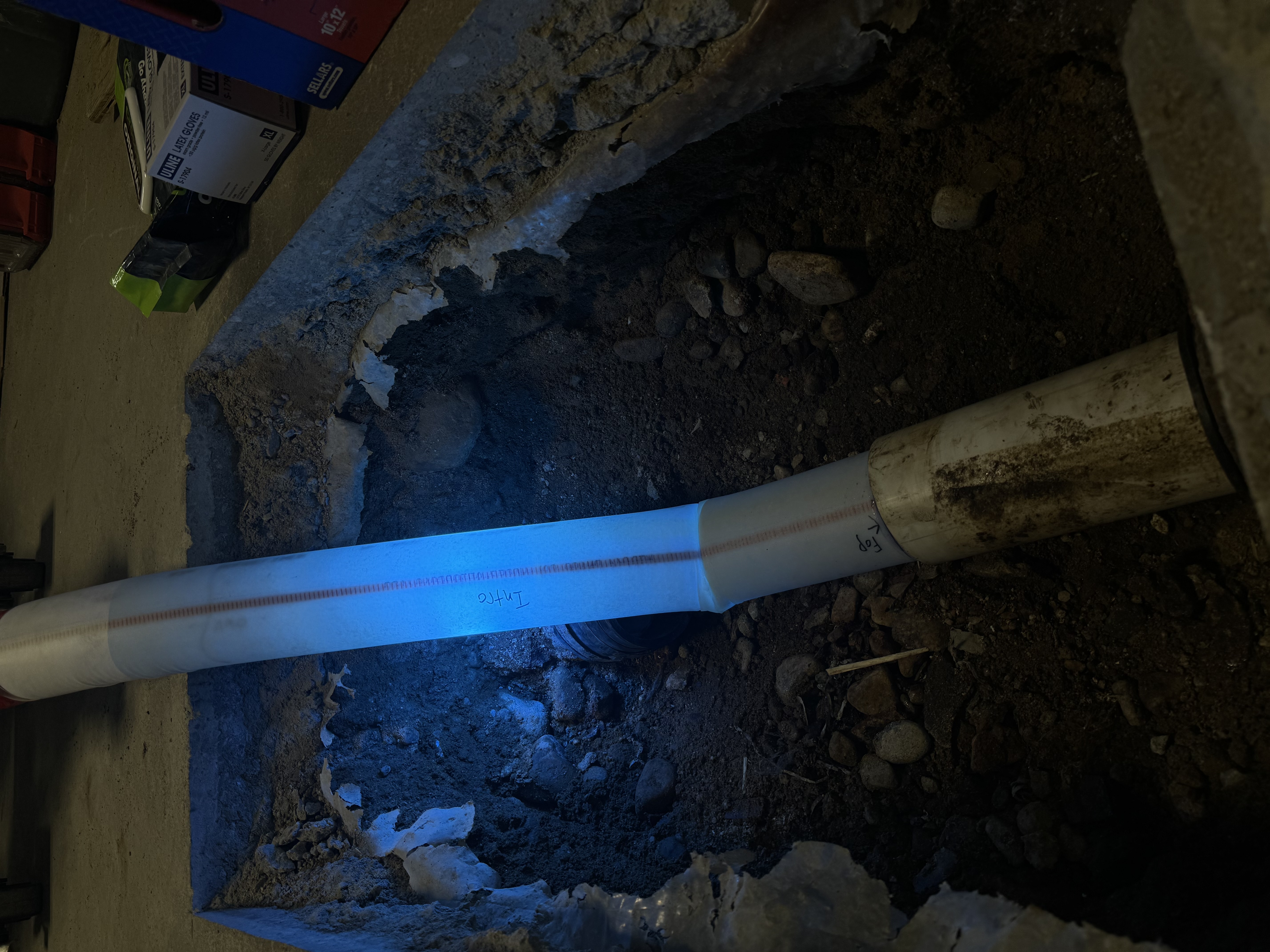
The CIPP liner is installed through the available access and cured inside the existing pipe. Depending on the liner system and project requirements, cure may use UV, steam, hot water, or another specified process.
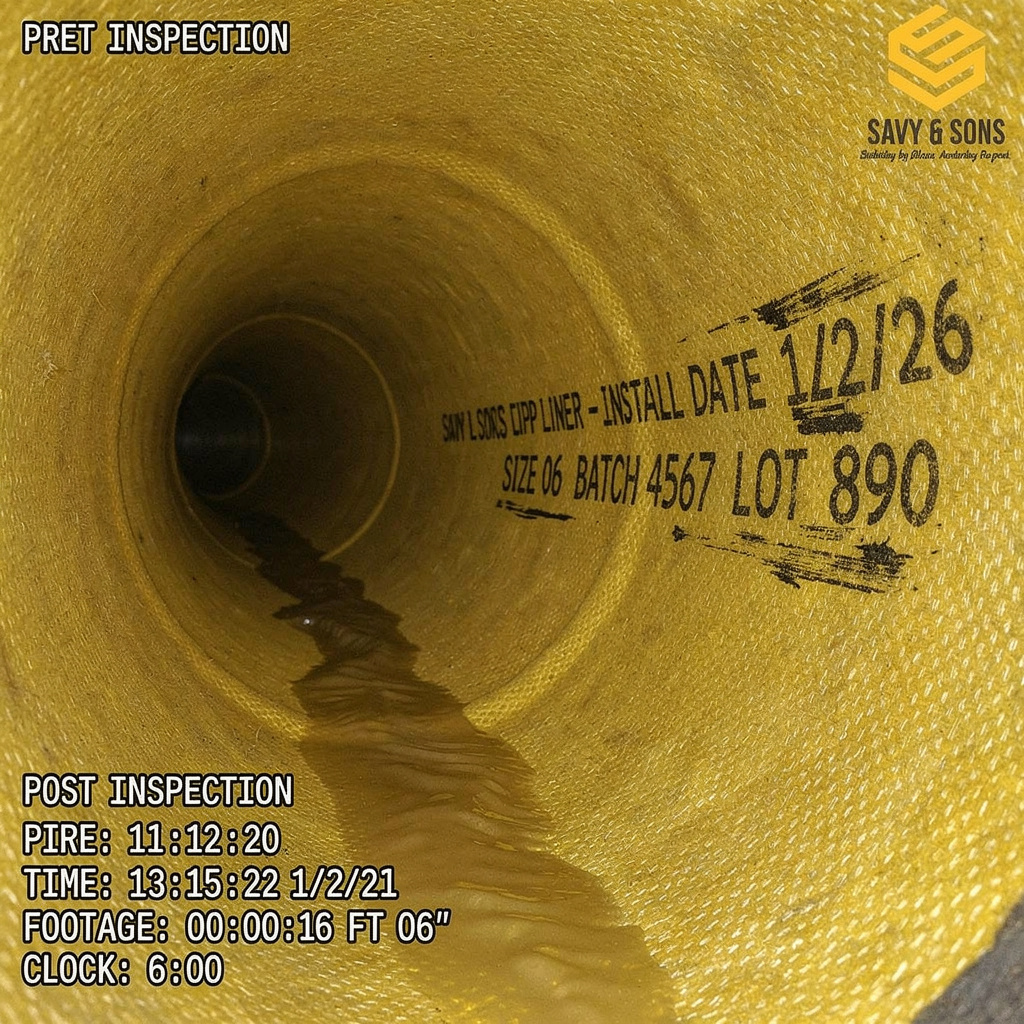
After cure, we reinstate the required connections and televise the rehabilitated section.
Our work includes commercial sewer lining, mainline sewer lining, lateral rehabilitation, municipal sewer rehabilitation, industrial sewer rehabilitation, and related trenchless pipe repair throughout Connecticut.
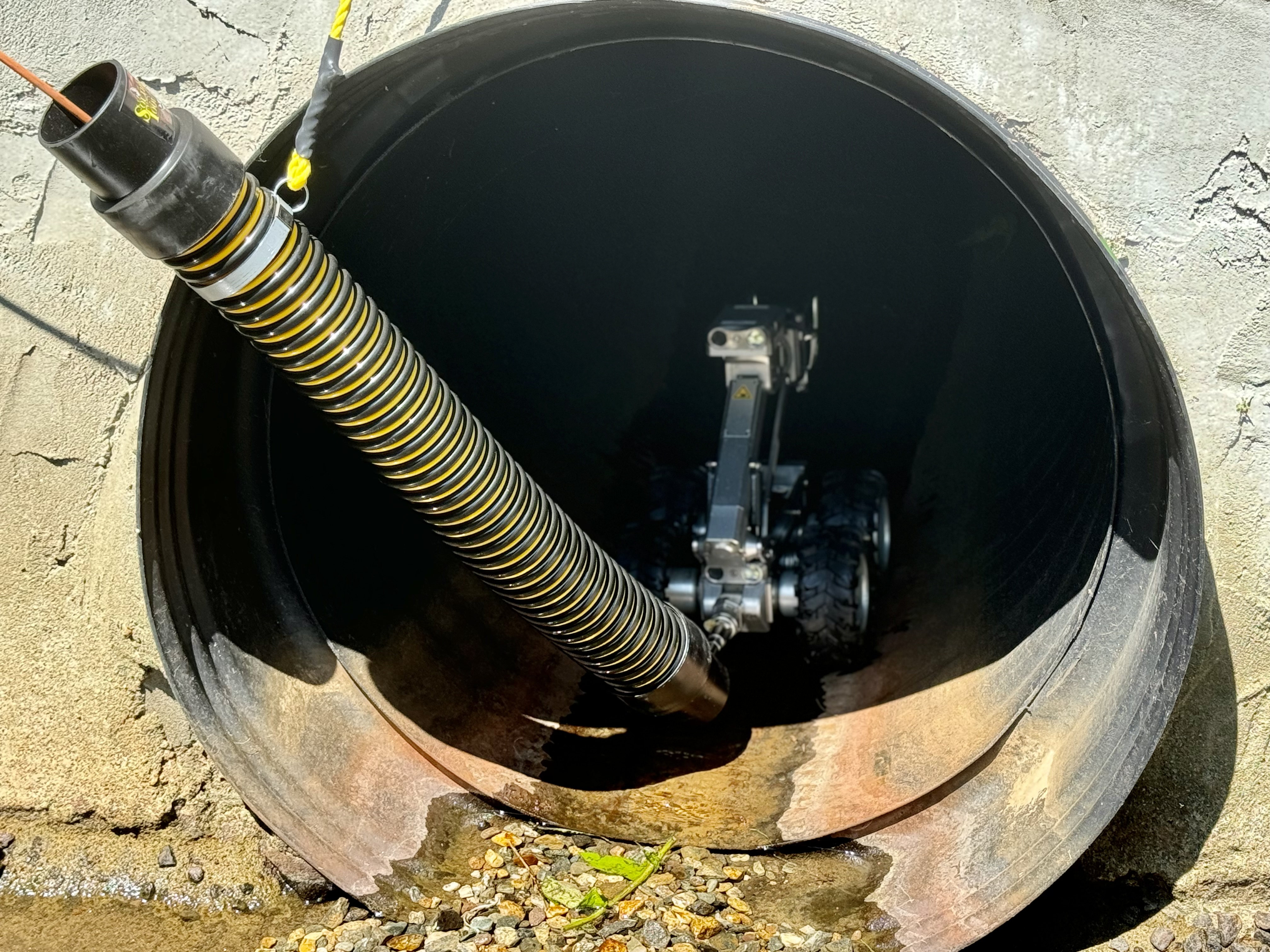 01
01We Televise the Sewer
Our CCTV equipment shows us the host pipe condition and the defects, connections, bends, and other conditions that can affect lining.
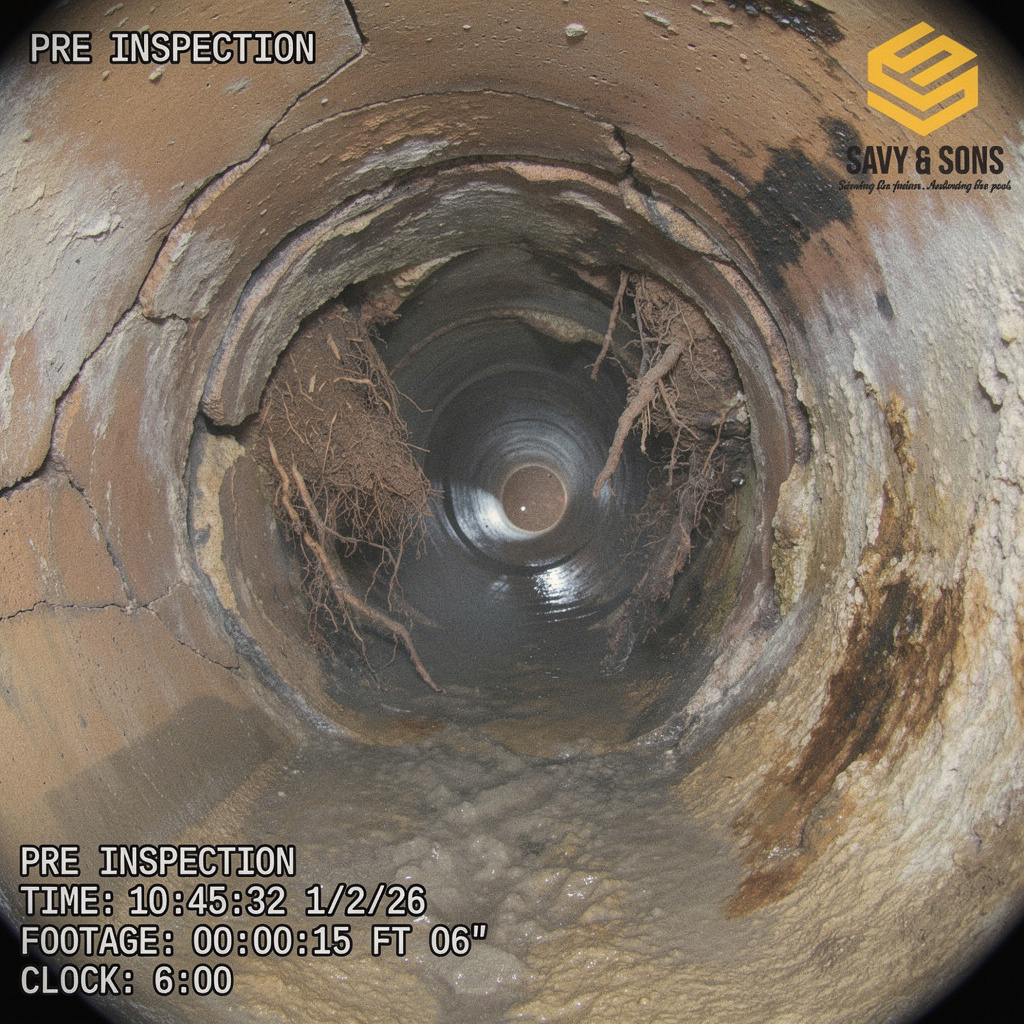 02
02We Clean and Prepare the Host Pipe
Our crew removes roots, buildup, scale, debris, and other material that has to come out before the liner is installed.
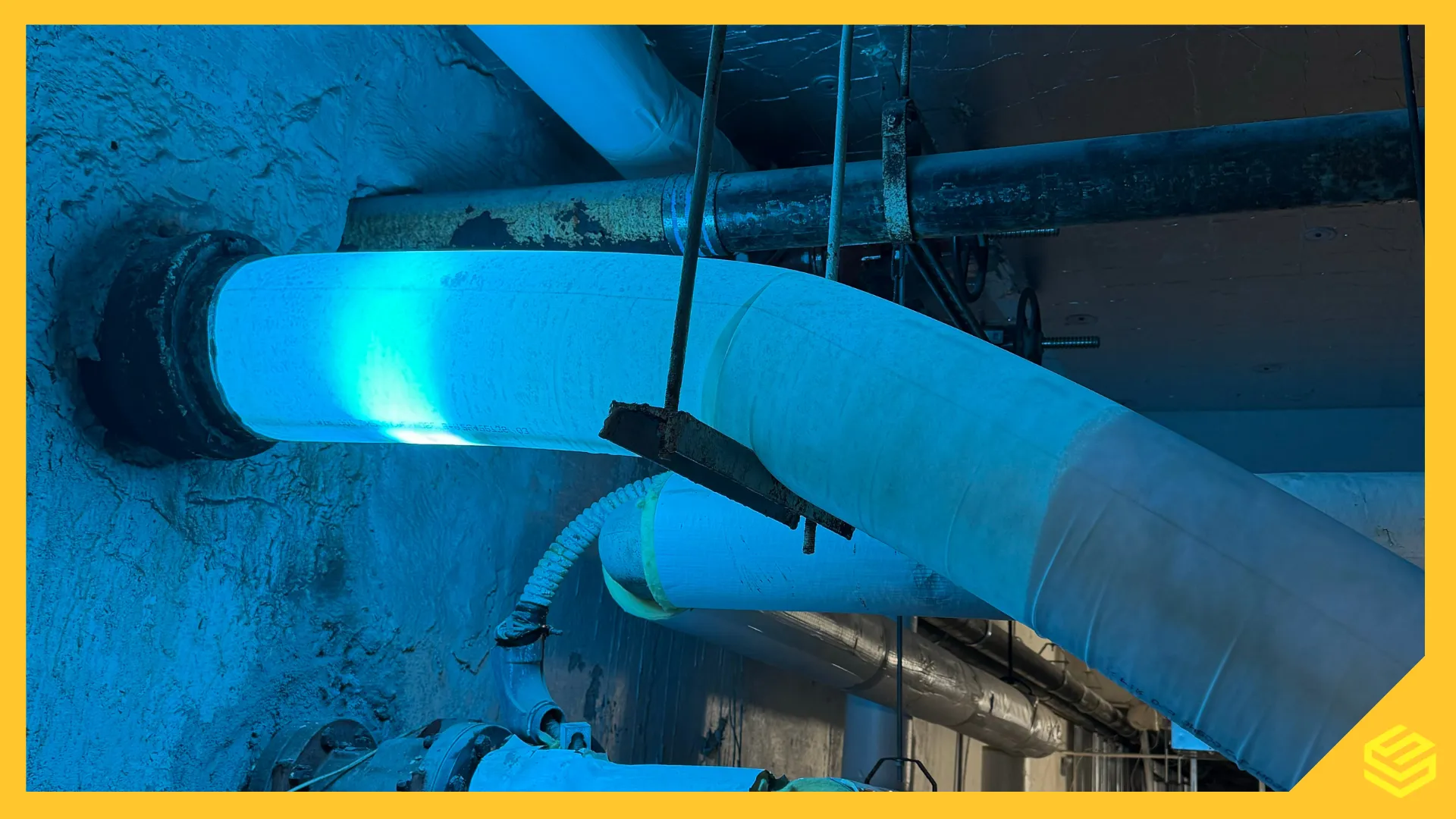 03
03We Install the CIPP Liner
The liner is sized and staged for the sewer run and installed through the planned access.
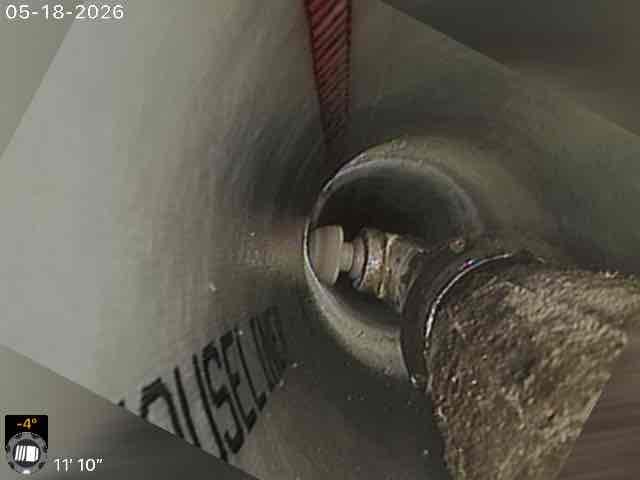 04
04We Cure and Reinstate
We cure the liner using the system specified for the job and reopen the required service connections.
 05
05We Televise the Completed Work
Our post-repair CCTV gives you and us a view through the completed rehabilitated sewer.
Trenchless Sewer Rehabilitation Throughout Connecticut
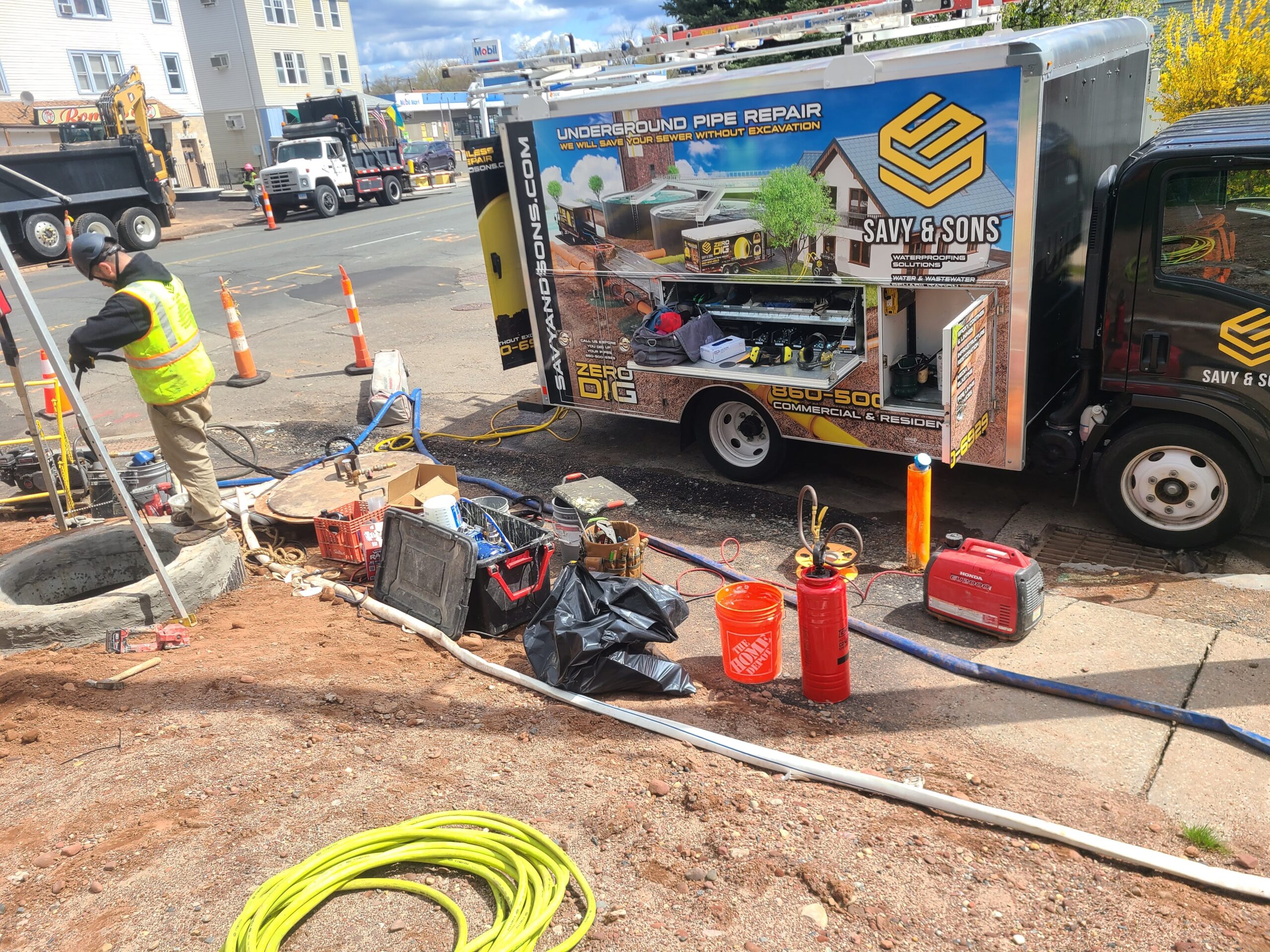
Our crews perform trenchless sewer repair and CIPP lining for commercial properties, municipalities, industrial facilities, institutions, campuses, private sewer systems, and other infrastructure throughout Connecticut.
- Commercial sewer mains and laterals
- Municipal collection-system rehabilitation
- Manhole-to-manhole CIPP lining
- Industrial sanitary sewer rehabilitation
- Commercial campus and institutional sewer systems
- Mixed-use and retail property sewer lines
- Sewer lines beneath parking, paved yards and loading areas
- Cast iron and clay pipe rehabilitation
- Mainline and lateral sewer lining
- Localized sewer repairs where excavation is required
We bring our CCTV equipment, pipe-cleaning capability, lining equipment, excavation capability where needed, and field crews to the job.
We Plan the Sewer Work Around Your Property
Commercial trenchless work is not only about what is happening inside the pipe.
Our trucks, cameras, cleaning equipment, lining equipment, access pits, bypass equipment, and crew all have to work inside a property that may still be serving tenants, customers, employees, patients, trucks, production, or the public.
Shutdowns & Flow
We coordinate when the sewer can be taken out of normal service and whether bypass pumping or temporary flow control is needed.
Traffic & Access
We plan around parking, loading docks, drive aisles, fire lanes, tenant entrances, deliveries, and other access that needs to remain available.
Utilities & Pits
We account for existing manholes, cleanouts, utility markouts, known conflicts, and where access pits can safely be opened.
Your Project Team
We coordinate our field work with your facilities contact, property manager, municipality, engineer, general contractor, or operator as the project requires.
We want the shutdown, access, bypass, traffic, utility, and scheduling issues worked out with you before our crew mobilizes.
We Show You What We Find
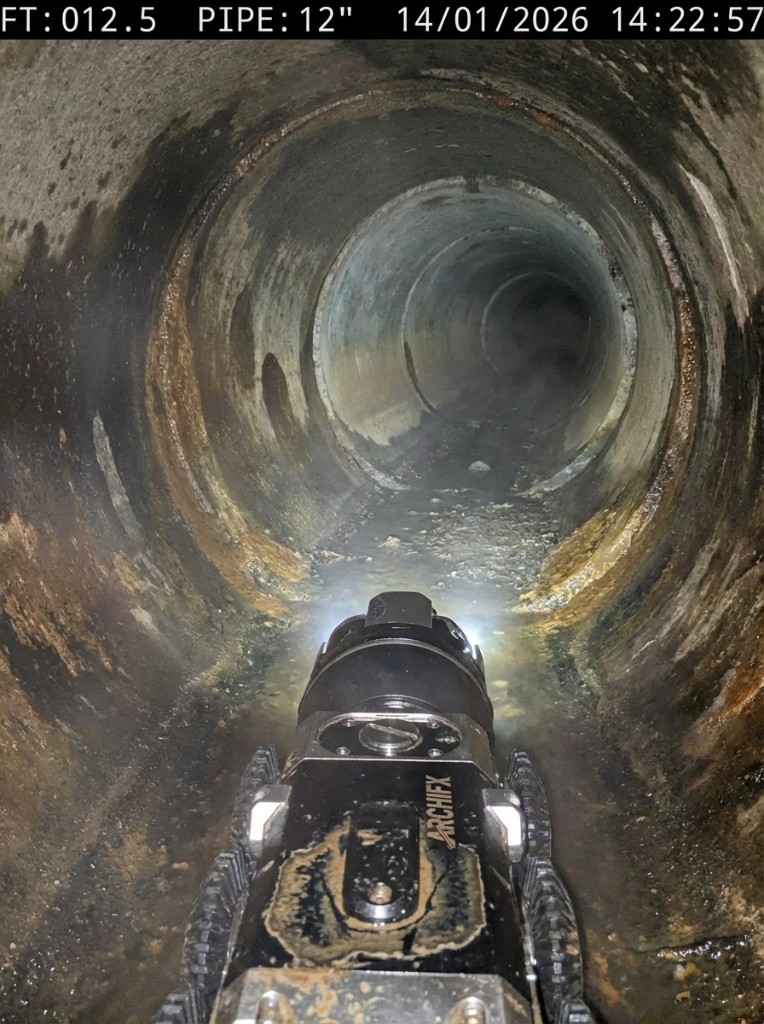
If we tell you there is a failed section of pipe, we want to be able to show it to you.
If we recommend CIPP lining, we want you to understand why we believe your sewer is a good candidate.
If part of the sewer needs to be opened, repaired, or replaced instead, we will tell you that too.
Our commercial clients rely on us to work around buildings, tenants, municipalities, engineers, contractors, traffic, production, and active facilities. We take that responsibility seriously from the first CCTV review through the completed work.
Send Us Your Sewer Findings
Send us your CCTV footage, inspection report, pipe information, photos, or simply explain what your property is experiencing.
Tell us if the sewer keeps backing up, has root intrusion, is taking on groundwater, has failed joints, is losing pipe wall, or has another recurring problem.
You do not need to diagnose the sewer for us.
Commercial Trenchless Sewer Repair Across Connecticut
We perform commercial, municipal, industrial, and institutional trenchless sewer work throughout Connecticut.
Send us the project address or ZIP code with a short explanation of the sewer problem and we will confirm coverage.